
Compostable and Biodegradable Packaging: Eco-Friendly Alternatives to Plastic
Disposable food packaging doesn't have to cost the earth. The quality of eco-friendly disposables made from plant-based materials has advanced at a dramatic rate over the past decade - they are cleverly designed to be every bit as functional and easy to use as traditional single-use packaging, while being far kinder to the environment.
Having eco-friendly options for takeaway containers – made from rapidly renewable, responsibly sourced resources like sugarcane pulp or bioplastic - appeals to 50% of global consumers, according to a survey by Tandberg.
From food packaging to cutlery, straws, napkins, coffee cups and lids, there's a huge choice of commercially compostable and recyclable options readily available. So isn't it time your business made the switch to a more eco-friendly takeaway service?
BROWSE ALL ECO-FRIENDLY DISPOSABLESWhat is Compostable Packaging?
Compostable food packaging will break down in a way that's far kinder to the environment than plastic after it has been used. When disposed of in the right way, compostable packaging will return to earth quickly and safely because it's made from plant-based and recycled materials.
One of the biggest benefits to the environment is that compostable packaging requires less carbon to produce. It also reduces the amount of waste sent to landfill, while providing the Earth with beneficial nutrients as it breaks down.
Biodegradable vs Compostable - What's The Difference?
What is biodegradable packaging? It's very similar to compostable packaging, but there are some subtle differences. Biodegradable packaging will usually break down in three to six months, while compostable packaging is much quicker. This is because certified compostable materials don't produce toxins as they deteriorate - it takes less time to degrade, and can also provide the earth with nutrients during the process.
Articles: Need to swot up on the latest environmentally friendly terminology? Check out this Eco-Friendly Glossary to get a full understanding of all the green phrases and terms you'll come across.

Do I Need To Start Thinking About Sustainability?
Businesses across all industry sectors accept they have a responsibility to go green. You’ll see many marketing-leading brands now have sustainability at the heart of everything they do.
That's because the environment matters to the customer, and that has a knock-on affect to profit and loss. Some consumers boycott brands they believe operate irresponsibly, showing that increasing numbers of consumers are seeking out responsible businesses and products instead.
These are behaviours that are particularly prevalent amongst younger generations; the sort of demographic most likely to spend money on eating out. If you want Millennials and Gen Zs spending money in your business, you need to think green and find alternatives to plastic - as well as ways to tell your customer that story.
Why It's Time To Consider Plastic-Free Packaging
When you're introducing a green approach to your business for the first time, it can seem slightly overwhelming. Where are you meant to start when it comes to plastic alternatives?
There's a perception that transitioning to more eco-friendly disposable cutlery and boxes can be costly for small businesses. However, it turns out it's cost-effective to go green. The more companies demand compostable and biodegradable plates and cutlery, the more the costs of these products are brought down.
And that's just for starters. When it comes to serving food on the go, disposable takeaway containers offer a convenient way to present food both beautifully and hygienically. In fact, 21% of consumers surveyed by Unilever said they would actively choose brands if they made their sustainability credentials clearer on their packaging and in their marketing – so it's something worth shouting about.

As the world isolated in response to the Covid-19 pandemic, food delivery apps such as UberEats and Deliveroo witnessed an unprecedented surge in demand - helping Australian restaurants survive with ready-made meals, takeaway, fruit and vegetable boxes.
Andrei Lussmann, Managing Director of Lussmann Sustainable Fish & Grill, reports having sold over 33,000 units of food and drink during lockdown.
Another key consideration is government-imposed plastic bans. South Australia is the first state in Australia to pass a Single-Use Plastic ban.
In 2019, the City of Sydney launched a NO Plastic business pledge, which more than 50 organisations have signed up for so far - from TimeOut Australia, IAG and WeWork to the Star Entertainment Group. These trends are the heart of a 'no plastic' wave, and small businesses need to start adapting.
Food service uses a lot of water and energy, which in turn it creates a huge amount of waste. You're not expected to be a 0% waste business after a week, but even small changes over time can make a positive difference to the environment and your reputation as a business. One simple way to make a change is to think about the type of packaging and consumables you use.
TIP: Investing in greener disposables such as biodegradable food containers, eco cutlery and compostable cups is a cost-effective way to show customers your commitment to sustainability.
What are Eco-Friendly Packaging Companies Doing?
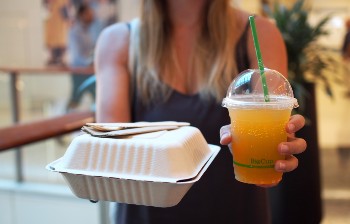
Eco-friendly food packaging specialists such as BioPak practise sustainable sourcing from managed plantations for their paper products. They choose catalytic renewable and biodegradable materials which can be easily recycled or composted, meaning less waste in landfill.
BioPak also uses Ingeo™ bioplastic which is made from plants, not fossil fuels, and the company is continuously striving to mitigate the negative impact its business has on the environment. With sustainable and responsible manufacturing at its core, BioPak is the first packaging company in Australia and New Zealand to become carbon neutral with its production facilities certified to ISO environmental, quality and food safety standards.
Many people still argue that onboarding compostable packaging at this time is pointless due to the lack of a thorough commercial composting infrastructure – it's a classic 'chicken and egg' adage.
However, the innovation occurs at the beginning of an eco-friendly product's life cycle, as opposed to waste management which stands at the end of our linear consumption economy.
To lead by example, BioPak has launched the Compost Network to make commercial composting infrastructure for organics and compostable packaging more readily available. Following this initiative, for the past 12 months, an increasing number of councils have similarly introduced food waste collections that include certified compostable packaging.
According to the Australian Organics Recycling Association, every 1,550 tonnes of organic material recycled in Australia accounts for one job availability. If 900,000 tonnes of organic waste are successfully recycled, 581 jobs will be created locally in addition to the compost for farmers to produce our food.
So, by starting your business on a journey towards eco packaging, you'll be playing an important part in creating a more sustainable future for our environment.
Jonathan Dudlak, from Chicago Paper Tube & Can Company, states that sustainable practices and packaging "is the single-most consistently growing trend we’ve seen in packaging over the past five to ten years". As a business, there are multiple ways to enhance your service with this greener range.
TIP: Biodegradable and compostable packaging significantly benefits the environment but, if not stored properly, it can perish. Light, heat and moisture can all significantly shorten the shelf life of your eco-friendly disposables, so always make sure you store them in cool and dry conditions away from direct sunlight.
Multibuy savings


Multibuy savings
What Materials Should I Choose?
Biodegradable and compostable packaging is available in a wide variety of materials. Knowing which one to choose depends on the type of takeaway food you're preparing, as well as the nature of your service.
Are your customers going to be sitting down at a picnic bench to eat, or eating on the move? Asking questions like this will help you decide which type of packaging will best suit your business. Below are some of the top choices, with the advantages and benefits they bring to your service.
PAPER
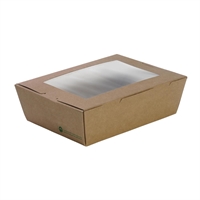
Using eco-friendly paper packaging products ensures our forests are not irreversibly damaged in the making of takeaway boxes. Paper suppliers are carefully chosen based on their proven sustainable practices. Paper packaging products are incredibly versatile, and can be used for anything from light bites and hot meals to tea and coffee.

- Suitable for both hot and cold food
- Lightweight and easy to carry when eating on the move
- A bioplastic coating will also make it suitable for 'wet' food such as soup or ice cream
- Single or double-wall paper cup designs will keep hot drinks warmer for longer
- FSC® certified paper is sourced from sustainably-managed forests
- Easily flattened after use to save space when storing for disposal
- Suitable for commercial composting or kerbside recycling
BIOPLASTIC
Bioplastic is an innovative plant-based material that is a reliable and sustainable alternative to traditional plastic. Often used to make eco-friendly cups, it is commercially compostable and has a carbon footprint that's up to 75 percent smaller than conventional plastics such as PET.
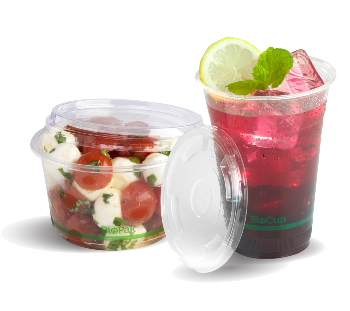
- Suitable for cold food and drinks
- More robust and rigid than paper
- Clear material is an eco-friendly alternative to plastic
- A strong and sturdy option for disposable cutlery
- Great for greener coffee cup lids that improve insulation while preventing spills
- Suitable for commercial composting
- Long shelf life if stored correctly
SUGARCANE
Also known as bagasse, this tree-free material is made from the pulp of sugarcane plants. It is a by-product of the sugar refining industry that would otherwise be burned. Sugarcane pulp packaging is durable, lightweight and reasonably priced. Being tasteless and odourless as well as heat and freezer-compatible, sugarcane pulp is an ideal alternative to traditional polystyrene meal packaging.

- Suitable for both hot and cold foods
- Grease and water-resistant for all kinds of food
- Lightweight and easy to carry when eating on the move
- Robust and rigid to protect food and keep it intact
- Microwave-safe to help with reheating tasks
- Fridge and freezer-safe for use as an extra storage option
- Suitable for commercial composting or kerbside recycling
- Indefinite shelf life if kept cool and dry
WOOD
If you're catering at an outdoor event or food festival with customer seating, you may want to serve your takeaway food straight to the plate. For these occasions, wood is a sustainable alternative to traditional disposable dinnerware. Birchwood in particular is a popular choice due to its strength, versatility and natural appearance.
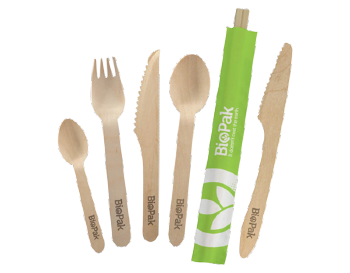
- Suitable for both hot and cold foods
- Grease and water-resistant for all kinds of food
- Strong and sturdy plates perfect for outdoor event catering
- Ideal for disposable cutlery as well as chopsticks and skewers
- Natural appearance adds organic charm to your food service
- FSC® certified wood is sourced from sustainably-managed forests
- Suitable for commercial composting
PALM LEAF
This palm leaf material is another great alternative to plastic or wood when it comes to choosing eco-friendly plates, trays or dishes. It is strong, sturdy and heat-resistant, giving you plenty of options when preparing or reheating dishes.

- Suitable for all kinds of food - wet or dry, hot or cold
- Strong and sturdy plates perfect for outdoor event catering
- Natural appearance adds organic charm to your food service
- Microwave-safe to help with reheating tasks
- Fridge and freezer-safe for use as an extra storage option
- Suitable for commercial composting

Multibuy savings
Multibuy savings
How Do I Dispose Of My Compostable Packaging?

So you like the sound of composting as an option to increase your environmental credentials. Now you're going to want to know a little bit more about the practicalities of making organic waste work for your business and the environment.
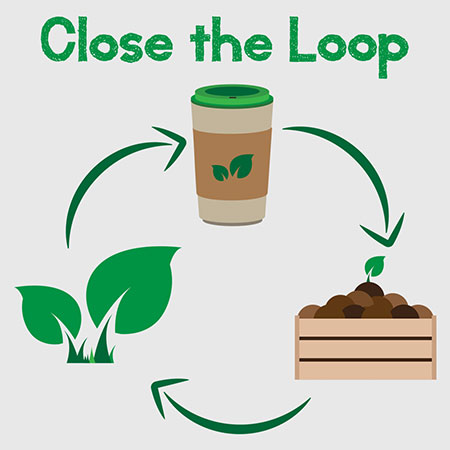
How do I close the loop?
Closing the loop is defined as the collection and recycle of consumer waste. It is not always possible to achieve, but offers you the highest environmental returns if you can find ways to do it.
Organic waste and recycling companies such as ORG offer a closed loop service to help customers dispose of their compostable packaging safely.
There is a charge for the service, but you can balance the cost against savings in other areas. Because you can discard food waste along with compostable disposables, you divert a large percentage of your total waste away from landfill or incineration.
This will help you cut your waste management costs, because companies tend to charge less to collect compostable waste. As food makes up around 40% of total waste from pubs, restaurants, hotels and quick service restaurants, this could lead to a significant cost saving.
If you don't live in one of the areas covered by ORG, you should contact your current waste management provider to find out if they offer waste collection for composting or enlist the services of a specialist contractor.
In Australia, there are around 150 commercial composting facilities with the perfect balance of warmth, microbes and moisture to turn organic waste into soil.
DID YOU KNOW: 34% of all hospitality industry food waste is left on consumer plates. On average 45% is from food prep and 21% is due to spoilage.
How do I sort my waste efficiently?
Organic waste will be rejected from specialist facilities if it is contaminated with plastics and other non-organic materials. You will need separate recycling bins for organic waste, both front and back of house.
Help your staff and customers identify different bins by using colour-coded bin lids.
What can go in my dining room and kitchen compost bins?

- Compostable packaging and disposables
- All fruit and vegetable waste (cooked and uncooked)
- Old bread and anything else made from flour
- Grains and pasta (cooked or uncooked)
- Coffee grounds, tea bags, filters
- Outdated boxed foods (check the packaging material)
- Crushed egg shells
- Undyed paper and card
What can't go in my dining room and kitchen compost bins?
- Glass, metal or plastic packaging
- Meat or meat waste (bones, gristle)
- Fish and fish waste (bones, skin)
- Dairy products and fatty foods
- Grease and oils
Why can't I put meat or fish in my kitchen composting bin?
- Meat and fish disrupt the nutrient-rich structure of vegetable and other food waste that break down a lot quicker
- They attract maggots, rodents and other scavengers that will compromise the standard of hygiene at your premises
- Your food waste storage areas will smell bad
The items that can go in your compostable kitchen bins will vary depending on the method (in-vessel composting vs windrow composting) used to turn organic waste to compost. Some facilities using enclosed composting methods will accept meat as a form of organic waste.
Other facilities will take food waste and compostable packaging products mixed together. Some will only take food waste and packaging separately. Ask potential waste management suppliers for exact information about what you can throw in your compost bins prior to agreeing any contracts.
REMEMBER: To avoid your compostable waste going to landfill, you need to have it taken away by a company that specialises in the disposal of compostable waste. ORG operates in Canberra and Sydney, or you can find a more extensive list of companies covering all territories at the Australian Organics Recycling Association website.
What if I can't close the loop?
It is easier to close the loop at self-contained events like festivals than it is for takeaway restaurants or 'grab and go' outlets. You can't be sure how your eco-friendly packaging will be disposed of when a customer decides to take away their food or drink - all you can do is encourage proper disposal.
If it ends up being thrown into a standard garbage can, the packaging will probably end up in landfill where it will take longer to break down - although it will still be quicker than the 500 years it takes for a plastic bottle to degrade in the same environment.
You will still be reducing the size of your carbon footprint due to the eco-friendly nature of the plant-based and recycled materials compostable packages are made from.
DID YOU KNOW: 11 of the world's leading brands including PepsiCo, Coca Cola, Mars and Evian are working towards 100% reusable, recyclable or compostable packaging by 2025.
How Do I Benefit From Using Compostable Food Packaging?

You'll probably have to pay a little more for compostable packaging, which is why you should advertise the fact you're taking steps to reduce your carbon footprint. So like all good business owners, you'll want to know what you get in return for that investment.
Social benefits
By using compostable food packaging products, you put yourself in a great position to appeal to consumers concerned about the impact consumption has on the environment. E-commerce packaging and delivery specialist Dotcom Distribution says that as many as 61% of consumers consider green packaging when deciding where to shop. That's already a significant amount of customers, and the figure is only likely to increase as younger generations are educated in an era of increased environmental awareness.
Financial benefits
If your business has started using compostable packaging, you'll now want to know more about your return on investment. Has streamlined waste management costs and showcasing your commitment to green issues had any effect on what's in your till?
An analysis report by the Carbon Disclosure Project (2014) concluded that large US firms taking proactive action on climate change saw an 18% higher return on investment than those who did not. Using a more subjective approach, the Economic Intelligence Unit found that 74% of companies they asked agreed that operating in a socially and environmental way had a positive effect on their finances.
Environmental Benefits
So you know you'll be 'doing your bit' for the environment - but how exactly?
- You will reduce the amount of carbon your business uses
- You will divert more of your waste away from environmentally-damaging landfill
- You will make a positive contribution towards reducing levels of pollution in the air, groundwater and soil
- You will help to conserve resources by reducing the amount of new/virgin materials needed to make packaging products
Reduced Price

Multibuy savings
Three Simple Steps To Start Your Transition to Plastic-Free
Global companies such as Nestlé and McDonald’s have pledged to make all its plastic packaging 100% recyclable or reusable by 2025. Do you want your business to be part of the wave? Here are a few simple steps you can take to begin your transition.
- Conduct a Supply Chain Audit to identify items in your supply chain that get taken away by customers (such as coffee cups). Get started today and assess the amount of non-recyclable plastic cutlery you save from by doing a before-and-after measurement of cost and quantity of items
- Phasing out single-use plastic from your business requires a double-pronged approach that includes educating customers to BYO - 'bring your own' reusable cups or bags - and offering customers an alternative to single-use plastic items. Consider rewarding behaviour and creating loyalty amongst your customers by offering a discount or incentives like double reward stamps
- Start your communications before you begin making the switch. Organise a staff training session or send an email to brief them on the changes that will take place. Understanding amongst staff members is essential for effective communication to the wider public – if your teams are fully aware of the 'whys' and 'hows', they'll ensure your customer base is too
Tell Customers Your Story
You're doing some great things for the environment - so now it's time to tell your customers about it. You can post status updates on social media platforms as well as goals and achievements, or do it on site by using a chalkboard decorated using these vibrant chalkboard markers.
Making your customers aware of your goals will increase the likelihood that they will dispose of the packaging in a way that is friendly to the environment.
A study carried out by the National Restaurant Association found that more than 80% of QSR diners will sort their waste if recycling bins are available and clearly marked.
Articles: Want some tips from the experts on how to spread the word? Check out these guides on Social Media as a Marketing Tool and How to Make a Chalkboard Sign to get ideas and inspiration.
How Can My Staff Help Me?
Your staff can play a major role in helping you maximise the value of your compostable packaging, and it's all achieved through training and proper processes.
Waiting staff are well placed to direct customers towards disposing of their organic waste in an eco-friendly way, while kitchen staff can also play an important role in diverting food prep waste into compostable bins.
The key to successful waste management will be dependent on how much your staff knows about your goals and how to achieve them. You could try:
- Training sessions to enthuse staff about the environmental benefits of compostable packaging and waste reduction
- Working with your staff to devise organised workflows to maximise the amount of organic waste captured separately
- Making sure your staff are clear on what items can go in your dining room and kitchen compost bins
- Setting monthly compostable waste targets and rewarding your staff with treats out of the cost savings if they are achieved