Catering Equipment for Wedding Caterers
Catering a wedding is no easy feat, requiring a lot of planning, thought, attention to detail, and preparation. Not only do you need to ensure you serve the right amount of food at the right time and temperature, you also need to cater to the needs (and wants) of the happy couple, who are more than likely to have a specific vision for how their special day should look. These days not everyone wants the traditional 3-course sit-down lunch or dinner, and wedding caterers are having to adapt quickly to fulfil the creative ideas their clients come up with - or even come up with new ideas for them.
But no matter the size or style of the wedding you’re catering for, you’re going to need the right set of equipment, tools and supplies to get the job done efficiently and effectively. And organising all the equipment you’ll need on the day will form a large part of your planning sessions.
Whether you’re a mobile catering service, in-house caterer, head chef, restaurant or hotel manager, ticking off all the essential items when it comes to the equipment required for the main event is essential if you’re going to provide a smooth, well-timed service, and a positive experience the bride, groom and guests will remember.
Planning & Organising Your Catering Equipment
The key to any successful function – be it large or small - is planning and organisation. You’re going to need a list, and you’re going to need to refer to it often. It’s all too easy to overlook crucial items when you’re in a rush to have everything prepared. Even if you’re in charge of a restaurant or hotel that already offers catering services and are comfortable with the process, weddings will generally require special attention and additional resources – more so if it’s being held off premises.
Before you begin to make a list of the equipment you need, first take the time to understand the type of event you’ll be catering for. Consider the following points as an example:
- What type of cuisine will be served?
- How many guests are expected?
- Is the wedding formal or casual, or somewhere in between?
- Will the wedding be held on or off premises? If off premises, how will the food be transported?
- Is a traditional sit-down meal required, or something a little more mobile?
- At what temperature will each course be served, and at what time?
Once you have taken stock of the basics you can start to develop a plan for the equipment and supplies you’ll need to get the job done efficiently.
Front-of-House Equipment & Supplies
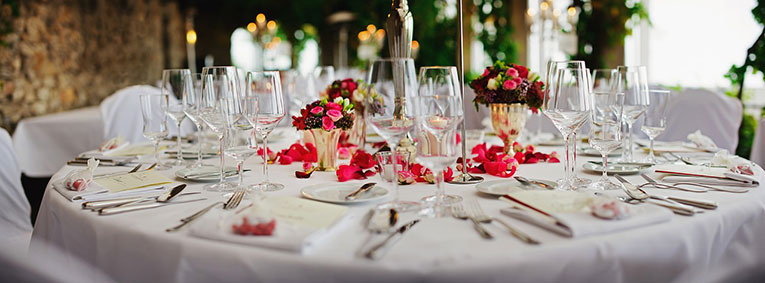
The front-of-house requirements for weddings are extensive, so depending on the number of guests attending and the type of venue you may need to rent or purchase additional supplies, such as glassware, silverware, plates, bowls, utensils, tablecloths, napkins, coffee cups and so on.
Of course, not all couples will request the typical 3-course meal on their wedding day, and may instead opt for a buffet, mobile catering solution (such as food trucks), or simply a variation on tradition. More and more often we are seeing a modern take on traditional wedding catering, and if asked to cater for something unique, your equipment will also need to adapt accordingly.
That being said, some traditions tend to prevail at almost all weddings. Guests will typically be greeted with a glass of champagne on arrival, so ensure you have enough fluted glasses for each guest, plus a few spares just in case. And once the official ceremony is over and guests move on to the reception venue, canapés will generally be served before the main meal, so you’ll need a range of boards, platters and trays to present them.
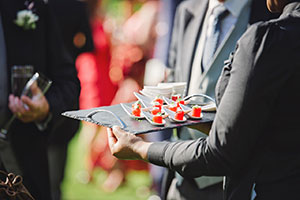
Following canapés, guests will be ready for their main meal, and this is usually where equipment requirements start to change. A buffet, for example, will have different needs than a 3-course meal.
For a traditional 3-course meal, you’re going to need (as a general rule):
- Service, dinner and side plates
- Bowls for soup and desserts
- Wine glasses, champagne glasses and cocktail glasses
- Tumblers and jugs
- Coffee/tea cups and saucers
- Enough cutlery for each course
And since you won’t be serving your food up on a bare table, you’ll also need to remember tablecloths, napkins, centrepieces, and salt and pepper shakers, plus decorative dishes for any condiments, butter, and sugar.
If your clients have decided to go with a buffet option instead, you’ll need to adjust your equipment list. A buffet will require additional supplies and equipment such as:
- Tongs and serving utensils
- Chopping boards for meats
- Chef knives
- Display baskets
- Gastronorms
- Serving trays
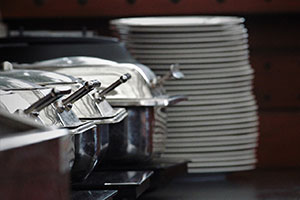
- A bain marie or heat lamp to keep food at a perfect serving temperature
It’s also a good idea to have some cutlery ready-rolled in napkins on hand and extra plates available at the buffet station, in case guests want to come back for seconds or any unexpected breakages occur.
Alternatively, if the wedding is very casual – for example, picnic style or catered by food trucks – you’ll need to add items such as ice tubs for soft drinks, straws, disposable plates, plastic glasses and paper napkins to your list.
After the main meal has been served and cleared away, your team needs to be ready for the dessert and wedding cake, plus cocktails and cheeses if requested. For these courses you’ll need:
- Dessert plates or bowls
- Signature cocktail glasses such as martini glasses
- Cake knife
- Food display trays to use as Cheese boards and serving plates
- Variety of cheese knives for both hard and soft cheeses
- Additional small plates, napkins and cutlery

Multibuy savings


Reduced Price
Back-of-House Catering Equipment & Supplies
If your business offers regular catering services for functions, your kitchen staff or internal catering team will need the right equipment in order to function effectively during prep and service. Modular equipment is very popular these days and is considered a sound investment for commercial kitchens, offering greater flexibility than a fixed or permanent set up. Modular equipment is very cost effective and can be installed quickly. You also have the benefit of being able to easily swap out individual pieces of equipment for repairs if needed. Thanks to the pre-manufactured assembly structure, modular kitchen equipment also allows you to quickly change the direction of your business, so even if you don’t plan to provide catering services right away, you can simply rearrange the kitchen to meet your new requirements when the time is right.
Modular kitchen equipment includes items such as:
As a chef, modular equipment provides you with the opportunity to set up the kitchen for maximum efficiency, so you can establish a smooth production line to ensure the preparation, cooking and serving of your food becomes a seamless, faultless process for you and your team.
Article: Find out more about how designing a commercial kitchen is the real key to success in a restaurant.
Once you have your kitchen layout established and set up with the essential equipment such as stove-tops and rangehoods, commercial ovens, fridges, freezers, dishwashers and the like, there may be some additional equipment you need to purchase to ensure the food you prepare arrives at the table looking fresh and appetising, as well as tasting the way you intended.
Depending on what’s being, you might also want to look at buying or renting equipment such as:
LEASING: We are partnered with Australia's only hospitality equipment funder: Silver Chef Rental.
And of course, you’ll need to make sure your kitchen is well stocked with all the essential supplies your team of caterers or kitchen staff will need, including:
- Cookware
- Professional kitchen knives
- Utensils
- Food storage
- Catering trolleys
- Recycling bins
Article: Are you catering for a wedding that requires disposable crockery? Invest in eco friendly disposables and learn more about the benefits of compostable packaging.
However, if you’re catering for an off-site event it can be a whole different ball game. When your in-house team is tasked with both preparing and delivering wedding food to a separate location, you’ll also need to add items such as:
- Insulated food storage
- Food storage containers
- Cling wrap
- Plate rings and covers
Additionally, you’ll also need to plan out the logistics of how you’ll get to your event, and any extra equipment you might need to ensure the food arrives at its destination safely.


Reduced Price


Mobile Catering at Weddings
These days many couples are wanting to create something a little different on their wedding day, so a venue which provides a ready-assembled team of in-house caterers may not be what they’re after. They may have a preferred caterer already in mind, or simply want a unique approach not offered with most standard venue wedding packages.
As a mobile caterer, you have a few extra things to take into consideration, such as:
- Amount of space available for setting up
- Sources of electricity for heating and cooling equipment
- Availability of running water
- Where rubbish can be disposed of
- Spare glasses and tableware in case of breakage during transport
- Insurance and licenses
It’s also worth noting that no two event sites will be the same, so while you may have access to a fully equipped commercial kitchen for one wedding, you may be required to supply all your own equipment for the next. This undoubtedly changes the logistics of the job, and the amount of equipment you’ll need to buy or rent.
Article: Launching a mobile food business? Find everything you need to know with our article on how to start a mobile catering business.
If assembling your own portable kitchen, you’ll need to arrange for delivery of the equipment needed for the food you will be preparing on the day. This may include items such as:
Another huge part of providing mobile catering services is in designing the menu, and for this you absolutely must keep transportation and logistics front of mind. You need to not only come up with dishes that will cater for a large crowd and a variety of dietary requirements (vegetarian, vegan, gluten free etc.), but also those which will travel well, such as pasta or vegetables, as opposed to delicate seafood. Depending on the event location and facilities available, you may have to prepare your menu off-site and transport it pre-cooked to the venue, and the last thing you want is all your hard work in the kitchen going to waste during transit.
If you are already in the restaurant business and are thinking about expanding into mobile catering, you may have the luxury of being able to reuse equipment and supplies from your restaurant. But of course, you’ll want to make sure you know exactly what you can allocate to your new venture without impacting your in-house guests. You don’t want to suddenly find yourself short on cutlery or plates in the dining room because your catering team are using them for an event.
Another key point to remember when providing mobile catering services is that your equipment and supplies checklist should be kept handy and checked regularly. If you realise you’ve forgotten something once you arrive at the venue, you might be stuck without it! Trying to serve steak to your guests and realising you left the steak knives behind isn’t an easy fix, nor is not having any additional meals prepped because someone forgot to RSVP. Keep your list at the ready so you don’t forget any of the essentials, and make sure you prep enough food for a couple of additional guests, so you’re not caught short.
Wedding Catering Trends
Along with the rise in popularity for less traditional weddings, a number of wedding catering trends have also emerged. It’s now easier than ever for couples to find inspiration online (think: Pinterest, Instagram etc.), so as a caterer you can expect to receive some unique requests when planning an event.
One of the most requested trends has to be the signature cocktail, which is typically served either alongside dessert, or just after. There are so many options when it comes to designing the perfect cocktail, so your bride and groom may choose to come up with their own, or ask you to come up with something to complement the theme of the wedding. Alternatively, they might be happy with a classic, such as an espresso martini, which is a great way to give guests a little pick-me-up before they hit the dance floor. Other ideas for signature cocktails include margaritas, mojitos, and champagne cocktails, all of which can be customised with different flavours and garnishes.
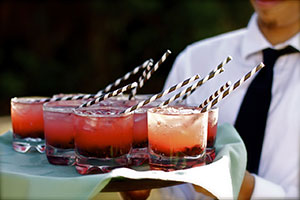
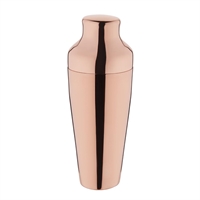
If asked to provide bar services when catering a wedding, make sure you have the appropriate glassware for the drinks – whether that’s extra champagne flutes, tumblers or martini glasses – along with cocktail shakers, and mixing utensils, ice buckets – whatever is relevant to the drink you’re creating. You’ll also need a nicely decorated table or service area to present the drinks to guests, so that instead of making to order (which can be very time consuming), guests can simply make their way to the cocktail area and help themselves when they’re ready.
Another trend that’s becoming more popular is roving dessert canapés, where guests are invited to select from a range of bite-sized desserts as they enjoy the reception instead of eating dessert while seated at their table. In order to cater for such a request, you’ll need to make sure you have enough trays or platters and cocktail napkins to serve guests, and even some specialised equipment to prepare each portion. This could include anything from whisks, to mixing bowls, to piping bags.
And let’s not forget the cheese ‘cake’ – a trend that has surged in popularity recently. A cheese cake is sometimes served in place of the traditional wedding cake, perhaps alongside some roving desserts, and is made simply from wheels of different varieties of cheeses stacked on top of each other, forming the shape of a tiered cake. A cheese cake will generally be served with accompaniments such as fresh and dried fruits, crackers, bread, dips and spreads.
In order to cater for one of these trendy cakes, you’ll need:
- A selection of cheese knives for both hard and soft cheeses
- Spoons and serving dishes for dips
- Wooden boards or platters for display
- Extra plates and linen napkins
Last but certainly not least, are the increasingly popular food trucks. Generally favoured by couples looking to create an ultra-casual event, food trucks and vans can provide guests with a diverse range of cuisines while providing a unique atmosphere. If you’re already in the mobile food business, you’re probably well stocked with all the supplies and equipment you need, but it’s always a good idea to liaise with your clients or wedding coordinator to see if there are any special requirements for the day. You’ll also need to go through the basic checklist of making sure you have access to water and power, and somewhere to dispose of rubbish. And of course, a good supply of disposable plates, glasses and napkins.


Planning for a Successful Event
As you can see, catering for a wedding can mean lots of different requirements when it comes to equipment and supplies, and the key to pulling off a successful service is planning, planning, and then some more planning.
Remember the checklist we keep mentioning? Make sure you get it started from day one, and keep refining as the event requirements evolve. This will help you keep on top of what equipment is needed and when, and keep any mistakes to a minimum. The idea is for the bride, groom, and their guests to have the best possible experience, without any idea of the potential chaos that might be happening in the kitchen!
Here is an example classic 3-course meal checklist for your reference, bearing in mind that all weddings will require slightly different equipment and supplies depending on individual needs.
Example: Front of House Equipment & Supplies Checklist (Standard 3-Course Meal Service)
- Dinner, bread and salad plates
- Bowls for soup and desserts
- Wine glasses and champagne flutes
- Water glasses and jugs
- Coffee/tea cups and saucers
- Cutlery
- Tablecloths, napkins and centrepieces
- Salt and pepper shakers
- Decorative dishes for condiments, butter and sugar
- Signature cocktail glasses
- Cake knife and slice
- Cheese boards and serving plates
- Variety of hard and soft cheese knives
- Additional small plates, cocktail napkins and cutlery
Example: Back of House Equipment & Supplies (Standard 3-Course Meal Service)
- Modular kitchen equipment (heavy duty ovens, fryers, table stands, shelving, sinks etc.)
- Food warmer
- Bain-marie
- Stick blender
- Hot water urn
- Coffee machine
- Microwave
- Food storage containers
- Rubbish bins
- Cookware
- Kitchen furniture
- Tea towels
With your checklist items all ticked off and your equipment needs sorted, the only thing left to do is order, prepare, and serve your food! And when you are organised right from the start, you’re setting yourself up for a smooth service and an event that the bride and groom (and their guests) will remember for years to come.