
The Ultimate Food Hygiene Guide for Business Startups
Established restaurants, bars and takeaway venues rely on positive reviews and a good reputation for future custom. However, this can be seriously compromised by issues of food hygiene, which now receive more widespread media coverage than ever before. Therefore, compliance with food safety regulations as a new food business is essential. It is vital to understand the importance of food hygiene as it is difficult to detect contaminated food by using smell or taste alone.
Who Needs A Food Hygiene Rating?
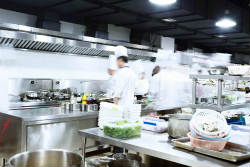
Food hygiene ratings are given to places where you can eat out, such as restaurants, takeaways, cafes, sandwich shops, pubs and hotels, and establishments that serve or prepare food such as schools hospitals and care homes.
If your food business is based from a mobile or temporary location such as a van, marquee or stall then food safety regulations still apply but tend to be slightly more flexible.
Article: Find out more about starting a mobile catering business with our article: How to Start a Mobile Catering Business.
All businesses are encouraged to display their ratings, but it is not a legal requirement. Naturally, a good food hygiene rating is something you'll want to advertise to customers, and there's no point in trying to hide a poor score because the information is easily found.
How Are Food Hygiene Ratings Calculated?
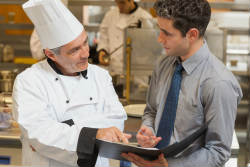
Food businesses are registered with their local council and inspected by council Environmental Health Officers. Inspections take place at least once every year to check the food hygiene standard of the business.
There are three ratings:
Excellent – five stars
Very Good – four stars
Good – three stars
These ratings are then represented with a star to help customers quickly see the rating.
If a business gets lower than three stars it's shown as not rated. The officer will explain to the business owner or manage what improvements need to be made and what action they can take to improve their hygiene rating. The way hygiene is judged is based on the following criteria:
- How hygienically the food is handled.
- How it is prepared, cooked, re-heated, cooled and stored.
- The condition of the premises and building structure – including cleanliness, layout, lighting, ventilation and safety facilities.
Can You Challenge a Food Hygiene Rating?
If the business owner or manager thinks that the rating is unjustified, they have the right to appeal in writing to their local authority’s lead officer for food.
A ‘right to reply’ differs from an appeal, as it allows the manager to tell prospective customers how the business has improved hygiene or to justify the poor rating on account of unusual circumstances.
How To Improve Your Food Hygiene Rating
To achieve a good food hygiene rating in the first place, you will need to demonstrate to an environmental health officer that you have complied with the legal requirements of food safety. This should be simple to achieve by following four principles of food safety:
Cross-Contamination
Cross contamination is an area that sees many businesses score badly in food hygiene ratings and is one of the most common causes of food poisoning. It is most likely to occur when raw food comes into contact with other food, surfaces or equipment. But how can you avoid this?
- Make sure you can thoroughly clean and disinfect all work surfaces, tools and equipment.
- Separate your raw and cooked food, in storage and the tools or utensils that they will come into contact with.
- Proper waste management is important too. Use kitchen bins to properly dispose of rubbish.
- Divide your cleaning supplies into those used only for raw, and cooked food, and keep them separated at all times.
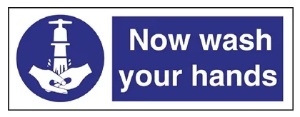
- Ensure your staff are aware of the potential risks of cross-contamination. Use safety signs to make this easy.
Article: For further advice on how to avoid cross-contamination and put systems in place, read our in-depth guide to colour coding your kitchen.
Cleaning
The simplest way to stop harmful bacteria from spreading is by ensuring your business practices good hygiene. Observing regular cleaning procedure and paying attention to detail is one of the most important aspects of maintaining food safety.
- Hand washing is essential before the handling or preparation of food. Help reduce the spread of germs by keeping hand wash in areas where the sink is in constant use during busy periods. Specific sinks for washing your hands are beneficial too.
- Use suitable cleaner or disinfectant for the task in hand. For example, are your cleaning chemicals safe to use on food preparation surfaces?
- Try not to leave spills, or food waste behind, keeping surfaces and equipment clean at all times. Blue roll works especially well for this.
- Clean surfaces, machines and equipment between tasks, especially after the handling of any raw food.
Chilling
Storing food in a suitable container in a chilled environment can help to stop the growth of harmful bacteria. Most ready to eat foods will require refrigeration, otherwise they will easily spoil at room temperature.
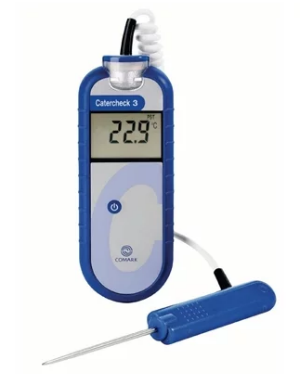
- Use a thermometer to check the temperature of your deliveries upon arrival to ensure best before dates can be kept.
- If possible, avoid removing chilled foods unless required to prevent the buildup of bacteria before preparation.
- Regularly check the performance of your fridge and freezer units and that they are at the desired temperature.
- Rotate stock as required, using a FIFO 'first in, first out' basis. You can also use labels to help staff identify food.
Cooking
Whether re-heating or cooking, any food that leaves the kitchen must be piping hot. This is especially important when it comes to any poultry, pork, rolled joints and also any foods made from minced meat. Problems often occur when these foods are not sufficiently heated in the middle, creating a breeding ground for bacteria.
Whole cuts of beef or lamb can be served pink as long as they are fully seared on the outside.
What Other Precautions Can You Take?
There are several other ways that a new business can ensure good food hygiene from the start. For example, you can ensure your staff are well-trained on food safety and cleaning procedures, including HACCP documentation and SFBB implementation.
What is HACCP?
The HACCP, or Hazard Analysis and Critical Control Points, can help smaller businesses stay on track with regard to their food safety practices. It is an internationally recognised system designed to reduce the risk of safety hazards in food.
What is SFBB?
Safer Food, Better Business or SFBB is a food safety management pack which is designed to help smaller scale catering firms comply with food hygiene and safety regulations. The pack has been developed with the Food Standards Agency, working with catering businesses, to be practical and easy to use.
Two Stage Cleaning
Another way to ensure against these risks is to employ ‘two-stage’ cleaning. The initial clean is to remove traces of food debris, and the second clean is to deeply sanitise each area.
Deep Cleaning
Schedule a deep kitchen clean. Commercial kitchens are required to be professionally cleaned once every 6 months by law, but one-off deep cleans can be scheduled at any time. This may be required if the kitchen has undergone a change of management or a period of intense use.
Food Hygiene Clothing
Keep your food hygiene standards high with the correct workwear. Aprons, gloves and footwear are all essential items in the process of food preparation. These items can help stop the spread of germs throughout this critical process. Protective clothing is traditionally white to highlight stains more easily.
Where Can I Get More Information?
There are several resources that can help any business, large or small get specific advice on food issues and bring their standards up to speed. This includes the Food Standards Australia New Zealand which has several resources aimed at startup food businesses.