The Importance of Food Safety
Food hygiene is crucial to our wellbeing. Whether it's through reheating food, or simply not having access to the right knowledge and equipment, it's easier than we think for food to become contaminated.
Around the world, it's a problem that's often underestimated. According to the World Health Organisation, an estimated 600 million people fall ill each year after eating contaminated food. Unsafe food containing harmful bacteria or parasites can potentially cause over 200 diseases. In this article, we'll cover how food poisoning happens, how to spot the symptoms, and how to prevent it.
Did You Know?
- The estimated annual cost of food poisoning in Australia is $1.25 billion. Food poisoning occurs, on average, in 5.4 million cases a year, including 120 deaths, 1.2 million visits to doctors, 300,000 prescriptions for antibiotics, and 2.1 million days of lost work each year
- An estimated 600 million – almost one in 10 people in the world – fall ill after eating contaminated food and 420,000 die every year, resulting in the loss of 33 million healthy life years (DALYs)
- Almost $700,000 in fines were issued to restaurants in Brisbane within the first year of a new Eat Safe Brisbane council initiative
- Across Australia, some restaurants have been handed penalties in excess of $200,000 for not maintaining food premises and equipment to a standard of cleanliness, failing to store food to prevent contamination and many more offences
- The penalties for not having a Food Safety Supervisor are set at a state and territory level. The fine ranges from $330 to $75,000, depending on the situation and where the business is located
Sources: These statistics were calculated using data from the World Health Organisation's Food Safety fact sheet, the Australian Government's Department of Health Foodborne Illness in Australia report, and the Australian Institute of Food Safety.
How Does Cross Contamination Happen?
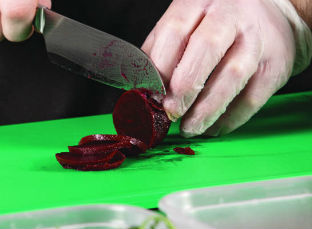
Improper food handling is one of the major causes of food poisoning. It's easy to accidentally place foods on surfaces that have been used to chop raw meat, or mix up used and clean boards. One of the easiest and most effective solutions is to use colour coded chopping boards, knives and utensils, so you can identify quickly which item to use for a specified food.
According to the Queensland Government, the Food Act 2006 highlighted common activities that result in cross contamination including:
- When the chopping board or knife is used to cut both raw and ready-to-eat foods
- When the hand wash basin is used for defrosting food and placing dirty utensils and equipment
- When storing food uncovered or on the floor of the fridge or freezer
- When storing/placing raw food above the ready-to-eat food
- When re-using cloths to wipe benches, cutlery, utensils and tables
- When using a towel to dry hands and used drying equipment, dishes and utensils
Article: Colour-coding your cleaning setup is a simple but highly effective way of reducing the risk of cross contamination. Read this What is Colour Coded Cleaning? guide to learn more about how it can benefit your business.


What are the Signs of Food Poisoning?
Food poisoning symptoms can range from very mild to severe. Depending on what has been eaten, they may come on within a few hours, or happen within a few days. Some of the symptoms to look out for include nausea, stomach cramps, diarrhoea, vomiting, fever and headaches.
What should you advise?
If your employee is suffering from diarrhoea or vomiting from any cause, they should be advised to stay home, rest and drink plenty of fluids. Food poisoning duration can vary, so make sure you act with caution when they are ready to return to work. They should not prepare any food for at least two days after the symptoms have finished in order to reduce risk.
If their symptoms persist for more than three days or are very severe, or if they are unable to keep fluids down for more than a day, you should advise them to contact a doctor. They should also be urged to seek medical help if their symptoms include blood or mucus in the vomit or diarrhoea.
Disclaimer - this information should be used as a guide only and, if users need medical advice, they should consult a doctor.
How can you prevent food poisoning in the first place?
One of the highest risks lies in reheating food. To safely store food, you should ensure that it's properly cooled before you put it in the fridge so it won't heat up your fridge and cause bacteria to multiply. When storing, you should use lidded containers, or sealed bags for soups or stews. Remember to keep foods separate to avoid cross contamination, and eat refrigerated foods within two days - or within 24 hours of defrosting them from the freezer.
Don't refreeze leftovers, and make sure you properly reheat over 70°C for at least two minutes. When reheating rice you need to be particularly careful as it's more resistant to heat, so make sure it's piping hot before serving.
TIP: Serve rice as soon as it has been cooked to prevent food poisoning. According to the NHS UK, uncooked rice can contain spores of Bacillus cereus. When rice is left at room temperature, these spores can grow into bacteria and can multiply, possibly producing toxins which cause vomiting or diarrhoea.
How To Avoid Cross Contamination and Food Poisoning
- Wash your hands properly, sanitise surfaces and keep appliances clean. At least once a week, throw out refrigerated foods that should no longer be eaten
- Rinse produce thoroughly to prevent microbes from transferring onto your foods
- Separate your goods when buying, preparing and serving. For example, never place cooked food back on a chopping board that was used for raw meat
- Cook all raw ground beef, pork, lamb, and veal to an internal temperature of 160°F or 71.1°C. Cook all poultry, including ground turkey and chicken, to an internal temperature of 165°F or 73.8°C. When storing, keep cold foods below 40°F or 4.4°C, and keep hot foods at 140°F / 60°C or above. Foods are no longer safe to eat when they have been in the danger zone between 40-140°F for more than two hours
TIP: The Food Safety Information Council advises people not to wash raw poultry before cooking because this can spread bacteria across your kitchen.
What Equipment Can I Use to Avoid Cross Contamination?
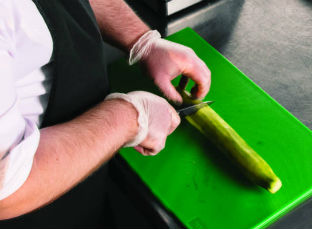
- Colour Coded Chopping Boards - Sets feature six coloured boards that are instantly identifiable for use with baked and dairy goods (white), salad and fruit (green), raw meat (red), cooked meat (yellow), vegetables (brown) and raw fish (blue). Scrapers can be used to remove nicks or scratches, while brushes are effective to scrub the boards clean. Store your sets in a rack to keep them safe and tidy between uses
- Colour Coded Chef Knives - Pair your chopping boards up with colour coded knives to further reduce the risk of cross contamination. Be sure that your blades are only being used with one food type
- Thermometers - Food thermometers can be used to get quick and accurate temperature readings. A digital probe thermometer can be used on cooked foods, liquids or semi-solids. There are even red or yellow colour-coded models for safe use with meat. While probe thermometers are very easy to clean, an infrared laser thermometer doesn't even require contact with the food
- Disposable Gloves - Blue disposable gloves are traditionally used with food handling because they are easily visible in production lines. Available powdered or powder-free, these gloves will protect your hands as well as your ingredients
- Soap and Hand Towel Dispensers - Strategically placed sanitiser or hand soap dispensers will encourage staff or guests to wash their hands thoroughly. For paper hand towels, wall-mounted dispensers are the most hygienic option because hands will only come into contact with one sheet at a time.
- Food Safety Signs - Reinforce the important message of food safety with a collection of adhesive signs to stick on your walls. Place them by sinks or meal prep areas to provide regular reminders for staff. Food hygiene signs can range from colour-coded instructions to hand-washing guides
Article: Read this Why Should You Colour Code Your Kitchen? guide to learn more about the various ways to combat cross contamination in a commercial kitchen.