Eco-Friendly Terminology
More and more businesses are enjoying the economic, social and environmental benefits of going green.
If you're new to it, going green and everything eco-friendly can be difficult to get your head around. There's so many different materials, features and terms used it can be hard work to know what's right for you.
This glossary will teach you everything you need to know about eco-friendly terminology.
Explore All Eco-Friendly ProductsIn this glossary
We'll guide you through the different end-of-life processes for products, the main eco-friendly materials and help you understand what each of the seven main types of plastic are.
To skip to any single part of this glossary, just click on one of the links below.
END-OF-LIFE TERMINOLOGY
Do you know the difference between compostables and biodegradables? Or do you want to learn more about what happens when you bin your products? View this section to learn more.
ECO-FRIENDLY MATERIALS
From recycled sugarcane to plant-based plastic, you can make so many products from these sustainable materials. Discover more about these materials.
TYPES OF PLASTIC
The best way to extend the life of a material and do more for the environment is to recycle your plastic. This section dives into the seven types of plastic, and which of these are widely accepted for recycling.
GENERAL ECO-FRIENDLY TERMS
What makes a product 'energy efficient'? What makes a renewable and non-renewable resource? These are the questions we answer in this handy list of simple definitions of the most commonly-used eco-friendly terms.
FAQs
We answer some FAQs about eco-friendly products.
End-Of-Life Terminology
Looking at a product's end-of-life process is one of the main ways to judge its credentials. The end-of-life process starts when a product is no longer useful to you. It will then be reused, recycled or permanently disposed of.
There are five terms used to describe a product's end of life. When you understand these terms you'll be able to decide which type of product is best suited to your needs.
Recyclable
A recyclable product is one that can be recovered once it's thrown away. It's broken down and made into a new product. Some of the most common types of recyclable material include:
- Paper
- Cardboard
- Plastic
- Metal
Products made from recyclable material require less energy, raw resources and carbon than those made from new materials, and that has a positive environmental impact. Recycling means less waste it sent to landfill which reduces the site's damaging impact on the environment.
TIP: Landfill is often the most expensive way to dispose of your rubbish. Recycling as many materials as possible will reduce the amount of times you send waste to landfill, saving your business more money.
Products can only be recycled once they're clean and dry. You might find that preventing food and drink contamination in recyclables difficult but it can be worked into your process. Heavily contaminated materials run the risk of being rejected for recycling and end up in landfill.
TIP: Recyclables should be sorted with designated recycling bins. The best recycling bins have labelled and colour-coded designs that make segregating each material easy.
Reusable
A reusable product is designed to last for years, whereas recyclables are generally used once and then made into a new product.
When you reuse products it dramatically reduces the consumption of single-use times. And that means less waste is sent to landfill and less raw materials and carbon is needed to make new products.
Although beneficial for the environment, recycling still needs energy to collect and process each material. The amount of energy and greenhouse gas emissions involved in powering the recycling process is also decreased as reusables have a longer life and reduce our dependence on single-use products
When they're finally disposed of, many reusables can be recycled and made into other items - completing the product's lifecycle.
Biodegradable
A product biodegrades when microorganisms such as bacteria and fungi encourage the naturally-occurring breakdown of materials.
The ability to biodegrade doesn't automatically mean a product is eco-friendly. Plastics are biodegradable, but they leave behind microplastics that can be harmful to our planet and its wildlife. You'll also find some biodegradable materials actually last hundreds of years before ever breaking down.
TIP: The products we list as biodegradable are ones that will break down quickly, without causing harmful effects to the environment.
Even though they might not break down quickly, you'll be able to recycle many of these materials. And that means fewer raw materials need to be sourced and used in the manufacturing process.
Compostable

Composting is a human-driven process in which a material will biodegrade under specific conditions.
These conditions include a certain temperature or within a set timeframe - when exposed to the correct balance of microbes, moisture, oxygen and warmth. To be called compostable, these products must biodegrade into nutrient-rich compost that can be used to grow more plants.
Codes and rules, officially known as 'standards', are used to lay out the specific conditions needed for composting. If a product complies with these standards it will be certified and labelled so users know it's compostable.
Items must be sent to commercial composting facilities along with food waste in order to fully compost. Products placed in a home compost bin may still decompose, but there's no guarantee they'll completely biodegrade within a set timeframe.
TIP: Even if your compostables can't be sent to a commercial facility, it's still hugely beneficial to the environment to use compostable products. These products are made from renewable materials which means they're not stripping the earth of its resources.
If you’d like to know more about these products, read our guide on the benefits of compostable packaging.
The Difference Between Biodegradable and Compostable
Biodegradation is a naturally-occurring process whereas composting always requires human input.
Certified-compostable items have a guarantee they will biodegrade under the specific conditions like set timeframes and certain temperatures. But biodegradable products won't have this guarantee.
Unlike compostable items, biodegradables also have no guarantee they will break down into the earth safely and produce nutrient-rich compost that can be used to grow more plants.
This means every compostable product is biodegradable, but not every biodegradable one is compostable.
TIP: It's important to remember, biodegradation is a naturally-occurring process, whereas composting is a procedure that has to have human input.
Eco-Friendly Materials
There are now lots of innovative ways in which manufacturers are creating greener solutions for your needs, such as plant-based plastics and heat-pressed palm leaves.
PLA
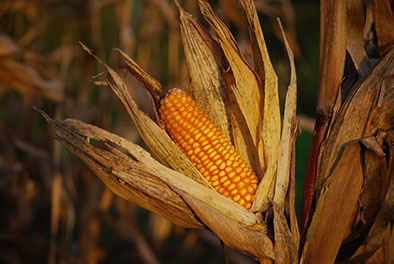
Made from plant-based materials like corn starch, PLA (or polylactic acid) is a compostable plastic.
This plastic is ideal for most packaging and disposable products because it looks, feels and behaves the same way as oil-based plastics.
PLA is a highly renewable material and can be composted in a commercial composting facility, making it a more eco-friendly alternative to traditional plastics.
Take Me To All PLA ProductsCPLA
CPLA is a form of PLA that has been crystallised for added strength and heat resistance. PLA is generally suited for cold use, whereas CPLA can be used with hot food and drink such as hot cup lids.
CPLA is preferred to make disposables like cutlery and straws where you need that extra sturdiness.
Like PLA, CPLA is made entirely from plant-based materials and is completely compostable in industrial facilities.
Take Me To All CPLA ProductsBagasse
Bagasse is made from recycled sugarcane, making it a fibrous material. The dry sugarcane fibre left from pressing juice and syrup is heated and pressure-moulded to create a bagasse product.
It's great for the environment as it's made from a renewable resource and waste product. And that means fewer materials are needed and even less waste is produced from the manufacturing process.
Plus, bagasse is completely compostable when disposed of in industrial composting facilities.
TIP: Aside from its environmental benefits, bagasse is also preferred over materials such as polystyrene for many practical reasons. Bagasse allows condensation to escape yet still keeps in heat. This makes it ideal for takeaway food packaging.
Most bagasse products are also safe for microwaves and fridges, allowing them to be used for a variety of purposes.
Bamboo

Bamboo grows incredibly fast. It's a tropical grass that grows at one of the quicket rates in the world, with entire bamboo forests grown in just a few years.
It can also regenerate without the need for replanting, it requires minimal fertilisation or pesticides and biodegrades quickly.
Bamboo is strong, hard and water-resistant making it a great material for food packaging.
Take Me To All Bamboo ProductsPalm Leaf
Palm leaf products are made from the fallen leaves of palm trees. The leaves are naturally shed up to seven times a year where they'll be collected, cleaned with water and heat pressed into different sizes and shapes. Palm leaf products are never made with chemicals or coatings either.
So they're completely organic, biodegradable, highly renewable and free from harmful substances which makes palm leaf products a great green alternative to polystyrene disposables.
TIP: As palm leaves are a 100% natural material, each product has slightly different colouring and patterns. This means every single palm leaf plate or bowl you buy will look unique to the next.
When the manufacturing process is finished, palm leaves also become tough, sturdy and highly heat resistant, making them perfect for a variety of food packaging purposes.
Recycled Paper/Card
There are many environmental benefits to using products made from recycled paper. When you recycle paper it means less waste is sent to landfill so the amount of harmful greenhouse gases released into the atmosphere is reduced. It also stops the pollution of soil, surface water and groundwater.
Using recycled paper also makes steps to minimising the damaging effects of deforestation on the environment.
As one of the most widely accepted materials for recycling, paper can be remade into loads of different products. It's an incredibly eco-friendly material for packaging and disposables.
Sustainable Forest Paper/Wood
Paper and wood harvested from sustainably-managed forests have lots of benefits for the environment.
There are many elements that define what a sustainable forest is. These include ensuring felled trees are regrown, the rights of indigenous people, forest workers and local communities are protected and all the ecological functions of the forest are preserved.
Forests that meet these standards are accredited with a sustainability certification. The most widely used certification is given by the Forest Stewardship Council (FSC). FSC-certified paper and wood products are guaranteed to be environmentally responsible, sustainable and sourced from a responsibly-managed forest.
Multibuy savings


Reduced Price
Types of Plastic
While most oil-based plastics (also called fossil-based plastics) will not biodegrade quickly and may leave behind microplastics when breaking down, they can still be recycled many times for a greener solution to landfill or incineration.
Nearly every type of plastic can technically be recycled. However, the extent to which they will actually be accepted and processed will change from product to product and material to material - due to logistical, technical and economic reasons.
With over 50 different types of plastics in existence, knowing which is which - and which is suitable for recycling - can be difficult.
Six of the most common types of plastic have been given ‘resin identification’ numbers (officially called codes). There is also a seventh category for "other" plastics. Most packaging items contain these small logos to help identify them for recycling.
#1. PET (or PETE) - Polyethylene Terephthalate
Polyethylene terephthalate, also known as PET or PETE, is one of the most commonly used plastics. PET is mainly used to make soft drink bottles, juice containers and food packaging such as salad trays.
Is PET widely recycled? Yes. PET bottles and packaging is a widely recycled product. Recycled PET (also called RPET) can be used to make everything from fabrics to new food packaging.

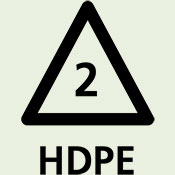
#2: HDPE - High-Density Polyethylene
HDPE tends to be opaque and is generally used to make milk bottles, cleaning product bottles and food packaging. Like PET, HDPE is one of the most commonly used plastics for food and drink packaging.
Is HDPE widely recycled? Yes. HDPE bottles, pots and tubs are widely accepted for recycling. Recycled HDPE is often used to make non-food containers, kitchen bins, recycling bins, bin bags, pens and cleaning chemical containers.
#3: PVC - Polyvinyl Chloride
PVC (commonly called vinyl) is a versatile plastic that can be used to make everything from cling wrap and shrink wrap to window and door frames.
Is PVC widely recycled? No. Cling wrap in particular is difficult to recycle as it tends to be contaminated with food or drink. Cling wrap is also not easy to sort mechanically, making it costly to process. However, there are waste management services that will accept PVC for recycling.

#4: LDPE - Low-Density Polyethylene
LDPE is mainly used to make carrier bags, high-strength bin bags, packaging wrap, squeezable bottles, food wraps and for lining cardboard containers.
Is LDPE widely recycled? Not currently, although more and more waste management services are beginning to accept LDPE for recycling – including carrier bags and bin bags. Recycled LDPE is used to make everything from bin bags and floor tiles to kitchen and recycling bins.

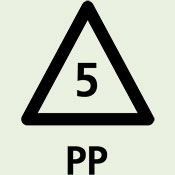
#5: PP - Polypropylene
Polypropylene is one of the most frequently used materials for packaging and labelling. Examples of polypropylene products include microwavable meal trays, bottle tops, food tubs and layers of film for food packaging.
Is polypropylene widely recycled? Like LDPE, polypropylene is not currently widely recycled, although an ever-increasing number of waste management services and local councils are starting to collect it.
#6: PS - Polystyrene
Polystyrene is used to make everything from takeaway cups and yoghurt pots to burger boxes, egg cartons and packaging peanuts.
Is polystyrene widely recycled? No, polystyrene is generally not accepted for recycling, although some industrial services will accept it. Expanded polystyrene (EPS) products such as cups and packaging peanuts aren't usually recycled as they can be difficult to segregate from other plastics and will often break up into small beads, causing blockages in sorting machines.

#7: Other
Other plastics that do not fit into the previous six categories will fall into this section. Examples of these plastics include polycarbonate, acrylic glass and nylon. Materials that are also made from a mixture of plastics may fall into this category.
Remember, almost every type of plastic can be recycled in some form, but you should always check with your waste management service first to find out which types they will accept for recycling.

General Eco-Friendly Terms
Carbon Footprint
Carbon footprint is the amount of greenhouse gas emissions created by a person, product, business or industry – generally measured in tonnes of carbon dioxide equivalent (CO2e).
Commercial Composting Facility
A commercial composting facility (also known as an industrial composting facility) is a large-scale site where huge volumes of organic waste are processed.
Commercial composting facilities generate the perfect balance of moisture, microbes, warmth and oxygen to break down this organic waste into nutrient-rich compost.
Compost
Compost is a mixture made up of decomposed organic matter such as food waste, animal manure and garden waste. Compost is rich in nutrients, making it extremely useful for fertilising soil.
Eco-Conscious
Being eco-conscious means you have an understanding of the effect your actions have on the planet, and change your behaviours to have a more positive environmental impact.
Eco-Friendly
Eco-friendly is a term used to describe a product, practice or process that has a small, less damaging or positive effect on the environment and its ecosystems.
End of Life
End of life refers to the point at which a product is no longer useful, and the beginning of the process in which it is reused, recycled or permanently disposed of.
Energy Efficiency
Energy efficiency is the aim of reducing the amount of energy needed to provide or run products and services. An energy-efficient product will last longer or perform more effectively while using the same amount of energy as a similar product. Some energy-efficient products, such as induction cookers, even deliver the same or superior performance while using less energy.
Greenhouse Gas
A greenhouse gas is a gas that traps heat in the earth’s atmosphere, causing the ‘greenhouse effect’. Without greenhouse gases earth would be too cold for life to exist.
However, humans are adding more and more greenhouse gases into the atmosphere, causing the planet’s temperature to rise. This is having a damaging effect on the environment.
The most common types of greenhouse gases are water vapour, carbon dioxide, methane and nitrous oxide.
Finite Resources
A finite resource (also called a non-renewable resource) is one that cannot be replaced as quickly as it’s used.
Fossil fuels such as coal, crude oil and natural gas can take thousands of years to replenish naturally – making them prime examples of finite resources.
In-Vessel Composting Facility
There are several types of commercial composting facility, but the most common used to break down compostable packaging products is an in-vessel composting facility.
In-vessel composting takes place in an enclosed environment such as a drum, silo or trench. Organic waste is fed in and exposed to controlled oxygen, moisture, microbes and warmth. It is then regularly turned to ensure the pile is aerated and that bacteria can break down all of the waste.
In-vessel composting can break down almost all types of organic waste – from compostable packaging and food scraps to animal manure and garden waste.
Landfill
Landfills are sites where waste is disposed of by being buried underground. Landfills can be damaging to the environment as they may pollute groundwater, let off greenhouse gases and cause odour pollution.
Plastic Responsible
Plastic responsible is a term used by the industry to promote a more careful use of plastic.
Plastic responsible is the goal of reducing the consumption of unnecessary single-use plastic, instead using more sustainable and eco-friendly alternatives. Plastic responsible also means reusing, recycling and composting as much plastic as possible.
Plastic responsible does not mean banning all plastics – at least until there is a functional and environmentally friendly alternative.
Renewable Resources
A renewable resource is one that can be naturally replaced as quickly or faster than it is used.
Examples of renewable resources include trees, corn starch and sugarcane.
Water Efficiency
Water efficiency means a product, process or service is using less water while still providing the same or superior level of performance.
Water efficiency is important for the environment as it helps to prevent water shortages and droughts. Being water efficient, or using water-efficient products, can also lead to large financial and energy savings.
Frequently Asked Questions
What is the difference between home composting and commercial composting?
The first difference between home composting and commercial composting is that commercial composting is done on a much larger scale. While only a small compost bin may be used at home, commercial composting facilitates are huge, allowing them to process vast volumes of organic waste.
These industrial sites also provide better composting conditions than home composting setups – allowing for controlled levels of oxygen, moisture, warmth and microbes. This will produce high quality compost in a much quicker time than home composting.
Another difference between home and commercial composting is industrial sites can compost more types of organic waste. Commercial composting sites have a pre-processing phase which shreds large organic waste into smaller fragments to make it easier for the microbes to break down. This means everything from compostable packaging to food and garden waste can be composted.
Do compostable plastics break down in the ocean?
No. Compostable plastics such as PLA and CPLA won’t break down if thrown into the ocean – at least not quickly. This is because they aren't exposed to the perfect balance of oxygen, moisture, warmth and microbes present in composting facilities.
Why use compostable products if they can’t be sent to commercial composting facilities?
One of the main benefits of compostable packaging products is that they are made from sustainable and renewable resources. If you are unable to send them to commercial compostable facilities, you can have peace of mind knowing that these items are not stripping the earth of its finite resources. Compostables also have a lower carbon footprint than their oil-based plastic alternatives.
Why is composting good for the environment?
Composting is good for the environment for a number of reasons. Firstly, composting means less waste is sent to landfill. This will reduce the amount of harmful greenhouse gases these sites let off into the atmosphere.
Creating nutrient-rich compost also removes the need for commercial soil conditioners and fertilisers – both of which can create significant amounts of greenhouse gas emissions during the production process.
Composting also means you can 'close the loop' and return natural materials back to the earth where they can be used for future agricultural growth.
Can PLA be recycled?
PLA and CPLA products can technically be recycled, but few sites currently exist that can process them. This is because there are not currently enough of these compostable plastics in the waste stream to warrant collecting and recycling them. If these compostable plastics are not separated from other traditional plastics, they can contaminate the recycling process.
Because of this, it is better to not recycle PLA and CPLA – at least until the infrastructure exists to do so.
How do I dispose of compostable products?
There are a few ways you can dispose of your compostable products.
The first is to get involved with the ‘Close the Loop’ service from Vegware. If you don’t live in one of the areas covered by Vegware, the second option is to see if your current waste management provider will collect your organic waste and deliver it to one of the 150+ commercial composting facilities in Australia. If not, you can always enlist the services of a specialist contractor.
The final option is to invest in an on-site composter. If you have the funds, space on your premises and the staff to manage it, an on-site composter is a highly sustainable way to dispose of your organic waste.
The compost created can even be used to grow your own fruits, vegetable and herbs if you have a kitchen garden.