
The Complete Guide to Marketing Your Restaurant or Café
In 1924 an obscure chef named Caesar Cardini made the enterprising decision to pop an anchovy into his salad dressing and a legend was made. Through word of mouth backed up by a strategic marketing campaign, Caesar became synonymous with salad and versions of his original product remain staples on menus throughout the world, almost one hundred years later.
Without his belief, branding and marketing, Caesar may have remained an unknown chef who regularly fielded customer complaints that his salad tasted a trifle ‘fishy’.
With the advent of multi-dimensional marketing, structured to encompass both traditional and digital platforms, the tools are in place for any food service entrepreneur to position themselves as a successful, competitive business.
Marketing VS Advertising
Before beginning any analysis of marketing strategies, a distinction needs to be made between marketing and advertising a business.
Advertising is one component of a comprehensive marketing campaign. As can be seen in the infographic below, a marketing model for a restaurant or café may comprise multiple modalities.

Making Your Mark — Business Branding
Close your eyes and picture the words Domino’s, McDonald’s, Hungry Jack’s or Coca Cola. Chances are, in your mind’s eye, you envisaged the words emblazoned with the colour and graphics so intrinsically tied to those brands — welcome to the world of business branding.
While it may seem ludicrous to compare a single outlet with these goliaths of the industry, the fact is, they all began with one single store. What they brought to the market was a unique identity which resonated with the public. Harness that into a microcosm, fix yourself in the public psyche and you are positioning yourself for success.
A strong brand is multifaceted and should involve both physical presence and philosophical principles. Examples of these are:
Physical Branding
Your logo and colours will provide the foundation of a recognisable business identity to customers and cohere staff into a team. This groundwork forms the basis of a strong business face and may include.
- Staff uniforms and aprons
- Principal staff attire such as maître d' and chef clothing including uniform, chef hats and chef jackets
- Branded hospitality supplies and restaurant kitchen equipment, such as crockery, coffee machines and display fridges, which are highly visible
- Shop front appearance
- Street signage such as blackboards that showcase your menu
- Digital branding including website, social media and apps
Philosophical Branding
- Public face — exceptional customer interaction
- Staff culture — striving for excellence in customer service
- Community — creating a local, recognisable presence through community involvement programs and support
- Business ethics — public perception
- Product — a menu and offering that reflects your brand and appeals to customers. From the cuisine to ingredients, preparation to special menus
Digital Marketing
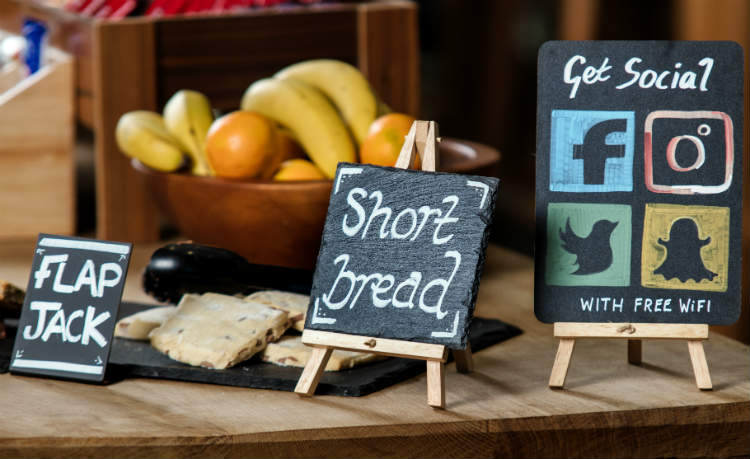
Social Media — Spreading The Word
Social media is your new word of mouth. It can make or break a movie, performance or restaurant, faster than any other medium.
According to a Local Customer Review Survey in 2016:
- 91% of respondents read reviews on local businesses
- 84% regarded those reviews as reliable as a personal recommendation
- 90% read less than 10 reviews before making their purchasing decision
Review sites such as Yelp are providing consumers with a platform to review and rate businesses in real time — making them a valuable asset to businesses who provide exceptional customer experiences.
Utilising and tailoring social media to build a social network and to optimise customer relationships using streams such as Facebook, Twitter and Instagram, has become a natural inclusion in most marketing campaigns.
Social media promotions should be personal, interactive and engaging. Keep them active, constantly changing and updating to avoid going stale. Use visual enticements such as photos of happy customers and appetising food.
Employees are a secret social media marketing resource. Consider this, when employees share a brand message on social media they get 561% more reach than the same message shared by the company’s own social media channels! Not only that, but that message will be shared an average of 24 times more and will receive eight times more engagement.
Such statistics would make even the most severe employer pause for thought about restricting staff’s social media interaction during work hours. Attaining and maintaining employee support for your business has never been so important.
Inbox Updates — Email Marketing
Whilst unsolicited email marketing may have fallen into disrepute, signing up customers to receive updates of freebies, discounts and specials, via your website or over the counter, still holds a place in any effective marketing arsenal.
Emails can be up to 40 times more effective than either Facebook or Twitter at acquiring new customers. That is a powerful incentive to consider implementing it into any comprehensive campaign.
Customers respond positively to genuine offers. Strategic email marketing is designed to build brand loyalty and awareness — inspiring customers to action.
However, the privilege bestowed on a business by the customer when their email address is given, is open to exploitation. At its best, email marketing can build engagement, relationships and trust — at worst it can become an annoyance and breach of a customer’s confidence.
The following may be initiated to encourage repeat business:
- Create a loyalty program for regular customers. This could be as simple as stamping a card or scanning an app. Rewards can be offered such as freebies, discounts and giveaways
- Have promotional days or times during quieter periods, to attract custom (eg. Happy Hour)
- Giveaways, discounts and two-for-one offers
Depending on the size of your business and commitments, you may choose to manage your own email marketing or outsource it to a third party. Providing the ability to ‘unsubscribe’ allows you to monitor and adjust your campaign in the event of disengagement or falling numbers.
To Market, To Market — Digitally Enhanced
The beauty of digital marketing is the ability to monitor just how effective your campaign is. Unlike the scattergun approach of traditional marketing streams, tools such as Google Analytics, which provide online traffic statistics and PPC (pay-per-click) where you are charged every time a user clicks on an ad, present clear ROI indicators.
For the restaurant and café trade, local online marketing strategies are ideal as this is where relationships and return business are built.
Website
Research suggests that a website has an eight second window to engage its online traffic, before they give up and move on. Slow response rates, poor design and functionality, have all been cited as culprits and the damage to reputation, once done, is hard to negate.
Neglect any area of your website, at your peril. Optimise and enhance:
- Speed — an effective website requires responsiveness
- Design and graphics — including custom photography
- Engagement — a functional website shouldn’t bombard the senses and overwhelm
- Functionality — ease of ordering and safe payment capability
- Layout — should be easy to read and navigate
Visibility
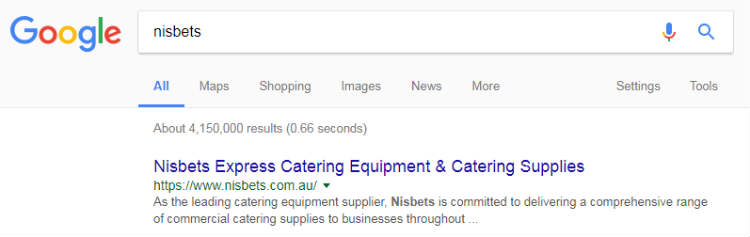
The oft-touted statistics surrounding the importance of appearing on page one of search engines may vary in percentage but not in fact. The general consensus is that over 90% of online searchers don’t go past page one of their search engine results. To put it simply, if your business is on page two, it is virtually invisible to the majority of your audience.
To circumvent this problem, a number of methods are employed to optimise businesses chances of being given preference by their search engine and catapulting them to the top of the list. To beat the odds, we must understand how search engines such as Google cherry-pick their preferences.
Page Ranking
Google’s PageRank algorithm (the method Google uses to give preference and higher ranking to sites) is complex but put simply, it uses a kind of voting system where preference is given to sites which appear to be the most optimal match to a search request.
Google uses this algorithm to calculate the sites which will provide the most value and relevance to users.
AdWords — Paid
Google AdWords and PPC are powered by the most popular keywords a user might type into a search engine to locate a business. When these keywords are typed into a search — your ad appears. Whilst this is a paid service, a business only pays when a user has clicked on their ad, meaning they can quantify the effect of every advertising dollar spent.
SEO — Free
Search Engine Optimisation is one of the most cost effective marketing tools to target an audience. It is the process of channelling online traffic through the use of strategic keywords, to obtain a high ranking placement — ideally first position on the first page of search results.
Since search engines such as Google, Yahoo and Bing rank content based on its relevance to users, SEO exploits this by identifying the ideal ‘string’ to match that search.
As an example, an online searcher may use the words ‘cheap restaurant Clayton’. A restaurant using that specific phrase in their online content will therefore be given priority by the search engine, enabling them to pinpoint their local target market.
The difference between SEO and AdWords is, whilst SEO uses an organic search, AdWords relies on bidding against competitors for keywords. Each time a user clicks on your ad, you pay a charge. This method requires a sound, well-structured ad campaign, to ensure the conversion rate of your traffic is high.
The benefit of both AdWords and SEO to restaurants and cafés seeking to capture local clientele is their ability to be area specific.
Blogger Outreach
Bloggers are to the 21st century, what food and movie critics were to the last century. Online bloggers have become powerful social influencers and for that reason, companies seek to leverage that popularity to promote their products or business.
Bloggers with a wide audience have a far more credible impact than direct advertising and marketers can target their demographic by profiling their bloggers. Having a blogger write about or recommend your restaurant or café by inviting them to review your food establishment at no cost, can be an effective marketing tactic.
Apps
As with websites, there are numerous companies now offering the specific capability to quickly and simply build personalised restaurant or café apps with branding and design functionality.
These are usually ‘hosted’ which means a monthly fee is paid for the service.
Smaller businesses may choose to use one or a combination of mobile ordering apps where customers can select from restaurants and cafés in their local area, order and have their food delivered.
The attraction for many businesses using these third party apps is the cost, since expenses surrounding vehicles, insurances and delivery staff, can be prohibitive.
Some of the more popular providers of this service are:
- Menulog — high profile with television advertising. Claims to be Australia’s number one food delivery site
- Foodora — specialises in reputable, upmarket restaurants
- Hey You — great for cafés but does not include a delivery option
- Delivery Hero — enables customers to pay cash at their doorstep
- Deliveroo — allows food tracking and promises short delivery wait times
- UberEATS — as the name suggests, an Uber based food delivery app, boasting fast delivery times
- Skip — Another simple app for cafés. Ideal for early morning coffee orders
Becoming Mobile
According to Google, globally more than 50 percent of search queries are now coming from mobile devices. Considering this, a comprehensive digital marketing campaign in the food and beverage sector should be optimised for mobile devices. To do this, there are a wide variety of routes that can be explored, such as:
Website Optimisation for Mobile
This means ensuring that, when hungry restaurant goers find their way to your website, it needs to be just as responsive as any other platform. Difficult navigation, aesthetically-unappealing page layouts or broken links will quickly cause your potential customers to look elsewhere.
When looking at your website analytics, a high bounce rate (essentially the website equivalent of an attrition rate) or low average page view time for your mobile site are both good indicators that something isn't quite right.
External Services
Mobile apps such as UberEATS have seen widespread success worldwide, allowing users a simple, streamlined way to connect with restaurants for food delivery. Review sites, such as Yelp or TripAdvisor, are also an excellent way to both gauge public opinion on your establishment and potentially influence users to try your services.
Traditional Channels — Taking It To The Streets
For all the hype surrounding digital marketing, there is still a strong case to be made for integrating traditional marketing methods into any campaign. How many of us have local restaurant menus attached to our fridge door? These are the ‘go to’ menus especially for older individuals who may be distrustful of, or uncomfortable with, online ordering platforms.
Traditional marketing techniques raise a business’s profile to the local neighbourhood and passing traffic. These are the bread and butter customers — the regulars who are within walking distance and can be swayed on a whim to eat out on any given night. Capturing and engaging this clientele through loyalty programs, discount promotions, half price nights and giveaways, will reap strong rewards and inspire return business.
Tried and true conventional marketing to the local community, may include some or all of the following:
- Pamphlet style restaurant menus with branded design and customised photography
- Leaflets — targeted menu letterbox drops and direct mail outs
- Print media — local newspapers
- Directories
- Radio and/or television advertising
- Networking
- Branded street signage and menu boards
Custom Photography — Mouth-Watering Magic
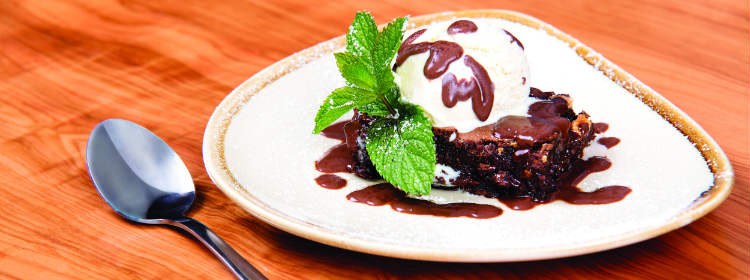
How often do customers sit at a table perusing a menu, undecided as to what to order, when they spy a plate being carried to another table and exclaim, “Ooh! that looks nice, I’ll have what she’s having!”
A realistic representation of dishes, both in-house and through online platforms such as apps and a website, can describe what no amount of words can depict. This is where the brilliance of professional custom food photography comes into its own.
Building a relationship with a professional food photographer will give a uniformity and consistency to your physical and online graphics.
Inspiring food photos are effective through online and traditional platforms including:
- Website
- Online ordering
- Page graphics
- Food app menus
- In-store menus
- Counter signage
- Billboards
A Word On Delivery

As touched on previously, interactive menu apps and websites enable customers to order online with either pick up instore or delivery. The importance of home delivery, especially in winter months when consumers traditionally shun leaving the comfort of footy in front of the TV, cannot be underestimated.
Even high end restaurants are offering in-home catering services to customers, opening themselves up to increased revenue streams.
Article: Find out more about the benefits of food delivery with our article: Are Food Delivery Services Profitable?.
Begin As You Mean To Go On — Planning For The Future

Attempting to implement a successful marketing campaign retrospectively can be more difficult due to customer perceptions and prejudices. For those just entering the food service industry, the time to put in place a multifaceted campaign is today. The first few months of a restaurant or cafés life are the most critically important to their success.
Begin your marketing strategy by outlining attainable objectives, pinpoint your target market and identify the brand voice which will resonate with your audience. Set a realistic budget in line with your goals.
Return On Investment — Weighing Up The Numbers
Whilst this guide makes a powerful case for investing in a multichannel marketing campaign, many SMEs still balk at the prospect of outlaying money on an unquantifiable return on their investment.
A successful campaign doesn’t necessarily equate to ‘the more you put in, the more you get out’, it is more about targeting industry specific channels.
Prioritise building a highly functional, visual and engaging website which will act as ‘home base’ for all marketing channels, digital and traditional. When all roads lead to your website, make sure it features any relevant information and conveys your brand and philosophy accurately.
Determining your marketing budget and available resources is the next step. Some channels, such as social media, cost little to nothing to set up, but can be time and energy consuming to run well. Other channels such as billboards and AdWords, demand less attention after initial setup, but will be a bigger cost.
Mysteries Of Modern Marketing — Where To Turn For Help
Many owners of food establishments will agree in theory to the advantages of implementing a digital marketing campaign to boost clientele, but are stymied as to where to turn to for help. For those who never realised being a restaurateur or café proprietor would involve more than the mere ability to provide fine dining, they may justifiably be wondering where to begin.
Approaching a reputable digital marketing firm can be the answer. Going armed with a clear plan and vision of what you require can help avoid being over sold products which won’t return your investment and will best funnel capital into areas with the highest return.
Although there are agencies who can run social media campaigns, many businesses choose to handle this themselves. Computer savvy staff are a wonderful resource. Most 15 year olds know their way round popular platforms such as Snapchat and Instagram and are more than happy to diversify their talents.
Whilst not every one of the aforementioned modalities will suit your particular dining establishment, understanding the myriad of marketing streams available and ways to best exploit them is the first step to becoming a successful food service enterprise.
In the modern world of advertising, perception reigns supreme. As Caesar Cardini learned all those years ago, by building your brand and implementing a dynamic marketing strategy, even the smallest venture can stand out from the competition and succeed.