
Why should you colour code your kitchen?
Is your kitchen colour coded? If not, it could be posing risks to your customers’ health. Using different colours is a vital part of kitchen health and safety and makes life simpler for everyone from your chefs to cleaning staff. From colour coded knives and colour coded chopping boards to different coloured cleaning equipment, investing in a multicoloured kitchen system is relatively cheap and will transform the safety of your premises for staff and customers without breaking the bank.
COLOUR CODING FOR HACCP
You are probably already undertaking HACCP (or Hazard Analysis and Critical Control Points). If you understand where there are potential health risks in your kitchen and take steps to eliminate them, that’s HACCP.
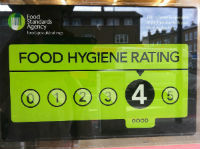
Food Standards Enforcement Officers want to see a good HACCP system when inspecting premises. For example, you may know that one set of tongs is used for raw chicken and the other for tossing salad, but how can you prove it to an inspecting officer?
Simple. The red tongs are used for the chicken and the green ones are used for salad. Coloured utensils show that your business appreciates the threat of contamination between different foodstuffs and is taking HACCP steps to avoid this. As such, using food safety colour coding in your kitchen could be key to a successful Food Standards inspection.
WHICH UTENSILS SHOULD BE COLOUR CODED?
There are lots of different colour coded utensils which can enhance your kitchen’s safety and limit the risk of contamination. Using different colours to distinguish between the uses of a range of kitchen implements not only improves customer safety, but also makes chefs’ lives easier. With this in mind, your kitchen should include the widest range of colour coded utensils that is practical.

As part of this, many people are already familiar with colourful boards, but may be wondering why they should be using coloured chopping boards as standard practice. Coloured boards are widely used and are designed to prevent cross-contamination between different ingredients by isolating them from one another. In this way, raw meat prepared on the red board should not contaminate raw vegetables cut on the brown board.
As we saw with our tongs example, however, you can and should colour code a range of kitchen utensils. After all, there's no point having a blue and a white chopping board if you are going to use the same knife for both! This means that although multicoloured chopping boards are important, you also need to think about other ways to prevent contamination such as coloured knives and tongs.
Colour coded tongs
Tongs are some of the most widely used utensils in the kitchen and this means it’s very easy for them to become contaminated. As we saw, having different coloured kitchen tongs is a firm way of implementing safe ways of transferring food.
Colour coded knives

If we’re cutting on colour coded boards, it’s only natural to do so with colour coded cutting implements, right? Using coloured knives also helps ensure that the correct type of blade is used on the correct foodstuff, protecting your knives from damage and giving your food the best possible finish.
Colour coded thermometers
Why use different coloured thermometers in a kitchen? Given that high temperatures kill most bacteria, using thermometers of different colours is actually focused on protecting people with specific dietary requirements. For example, if you are simultaneously baking a loaf of bread and a chicken, would you really want to use the same thermometer for both?
In this case, using a white thermometer for the bread and a red one for the chicken protects vegetarians from unwanted contamination with meat and anyone with a gluten allergy who may later eat the chicken.
WHICH COLOUR KITCHEN EQUIPMENT SHOULD I BE USING?
Every establishment can use different coloured kitchen equipment for different things, but the recommended food group for each colour is:
Given that your kitchen staff may have used a different system in the past, it’s also vital to display the information on your colour system clearly, which is why many different coloured knife and chopping board sets also come with a wall chart.
COLOUR CODING FOR CLEANING
Commercial kitchens require extensive cleaning and, since 2006, the Foods Standards Agency have recommended that a different colour of cleaning equipment is used in areas where ready-to-handle foods are stored and prepared. Colour coded cleaning protects your kitchen from contamination by cleaning equipment from less hygienic areas such as bathrooms as well as from cleaning products which are unsafe for use in kitchens.
Even trace elements of unsafe chemicals could force the closure of your kitchen, meaning that separating the cleaning of your kitchen by using different colour equipment is the safest way to protect your customers and guarantee the hygiene and safety of your food preparation areas.
That said, The British Institute of Cleaning Science (BICSc) recommends that yellow cleaning equipment is used in kitchens and food preparation areas, so it’s important to differentiate between cleaning products and those used as part of your food hygiene colour coding!
COLOUR CODING FOR CONVENIENCE

Colour coding is not just a fantastic option because it improves your kitchen’s safety. Colour can only help you keep things running smoothly. For example, imagine you are clearing a fridge on Thursday. Rather than having to peer at each individual label to read whether it says Tuesday or Thursday, isn’t it easier that Tuesday is yellow and Thursday is brown? Coloured day labels can take the hassle and tedium out of a mundane task and ensure your stock is all fresh and in top condition.
DO YOU REALLY NEED DIFFERENT COLOURED KITCHEN EQUIPMENT?
It may seem patronising to ask experienced chefs to use different colours of equipment, or appear unnecessary to have a yellow knife, blue knife and red knife at the same time during a quiet service. Unfortunately, however, contamination can occur in any establishment.
In 2009, Heston Blumenthal’s triple Michelin-starred restaurant The Fat Duck left over 600 people reporting feeling unwell, whilst ‘the world’s best restaurant’ Noma gave 67 guests food poisoning in 2013. Even the world’s best restaurants can pose a health risk to customers and staff, but colour coding your kitchen is a vital step to reducing the risk in your establishment.