
BUYING CUTLERY
Like every part of your restaurant, the choice of cutlery will not only be down to personal preference, but what fits into the theme or style of a restaurant. The table choices should complement each other, yet not detract from the food. The design choice needs to coordinate with the dishes, place settings, glassware, tablecloth, napkins, and personal style.
THE HISTORY OF CUTLERY
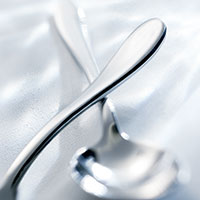
Although there are cutting implements dating back through history, the earliest known bit of metal table flatware was the knife, which is believed to have been used as early as 2,000 BC, though it was extremely rare. Spoons came along around 5,000 BC; the earliest found were made of stone or clay, not metal. Forks came somewhere around the 9th century. These didn't look like the forks seen today; they looked more like a small spear.
In the Middle Ages, people primarily used their fingers to eat. Table knives didn't come around until about the 16th century; prior to that, men used items such as pocket knives or daggers. At that time, there may have been a spoon on the table as well. It's not sure exactly when people started using cutlery on a daily basis, it's believed to be sometime around the 17th Century.
TYPES OF CUTLERY
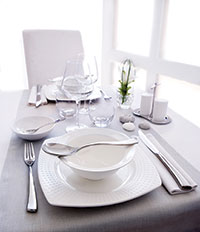
Of the cutlery available on the market today, 95 percent of it is made from stainless steel. There are three types of stainless steel that cutlery is made from.
- Austenitic stainless steel known as 18/10
- Ferritic stainless steel known as 18/0
- Martensitic stainless steel known as 13/0
ADDING NICKEL AND CHROMIUM TO CREATE STAINLESS STEEL
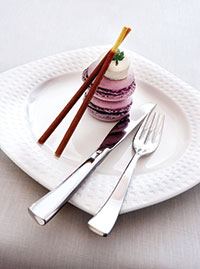
To turn steel into stainless steel, nickel and chromium are added. The numbers used in describing the type of stainless steel relates to the percentages of chromium and nickel used when making it. For example, 18/10 is made up of 18% chromium, 10% nickel, and 72% steel.
Chromium is added to steel to produce stainless steel to enable a mirror polish to be applied to give it an attractive appearance as well as giving a protection barrier for stains. It is chromium when added that makes the steel softer.
Nickel is added to cutlery to give it more protection against water attack and therefore protection against rusting. Water is the number one enemy of stainless steel cutlery; if left on stainless steel for periods of time, it will rust. Contrary to popular belief, nickel actually softens the steel; this means knife blades can’t be made from stainless steel containing nickel as a lasting cutting edge can’t be gained.
Ranking Cutlery Grades
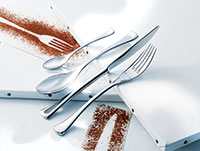
When it comes to the grades of cutlery, each hold their own elements:
- 18/10 is seen as the best quality of the three and is often the most expensive due to the price of the nickel. 18/10 is less likely to rust than 18/0 or 13/0.
- 18/0 is cheaper than 18/10 however, initially when first purchased you may not be able to tell the difference as both contain 18% chromium and no nickel, it is a harder metal.
- 13/0 is the cheapest and most likely to rust, however due to the fact that it has less chromium and no nickel, it is a harder metal.
All solid handle knives are made of 13/0 steel, even when the spoons and forks are made from 18/10 as the softer metals would lose their cutting edges too quickly. This also means that if left in water, knife blades are the most prone to rusting.
Making Cutlery
Cutlery comes in two formats; forged and stamped:
Forged Cutlery
Forged is made from bars of stainless steel; tube shaped cutlery is made by this method enabling shaped designed cutlery of round, square, or oval. This format has limitations on pattern definitions though and therefore most cutlery produced is a plain design. This is more labour intensive so often forged cutlery is seen as premium to stamped.
Stamped Cutlery
Stamped or ‘pressed’ is made from sheets of stainless steel and is used to manufacture a high variety of cutlery design. A high proportion of cutlery is produced using this format as it allows for many varieties of designs to be produced.
Buffing Cutlery
When it comes to finishing the cutlery off, this process is known as buffing; this polishes the steel. In all, there are 27 levels of buffing. The more processes, the more expensive the cutlery is due to the high labour intensity of the process. Economy cutlery will go through three or four levels, whilst top 18/10 could go through all 27 levels.
Making a Decision
Cutlery is available in various designs, weight and shapes; choosing the right one for a restaurant can take time. If there are many designs and styles to choose from to match existing tableware and settings, there are sample sets available to order and ensure the right choice for the restaurant.