
Buying Chef Jackets
Chef jackets are an incredibly important part of your uniform. A decent jacket will protect you from heat, hot oil and anything that can burn you. And they can be used to signify your role in the kitchen. They come in so many different styles, so finding the best chef jackets in the right fit and quality to meet the demands of your kitchen needs some consideration.
Style
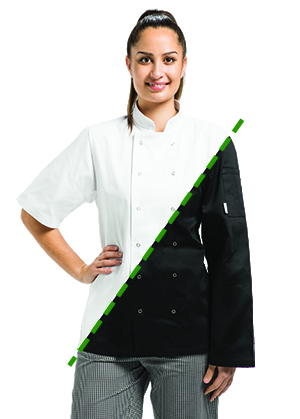
There are a few things to think about before you buy your jacket. Do you want long or short sleeves? Double breasted or single? There’s no right or wrong answer, the majority of the time it’s down to personal preference.
Consider the following:
- Style: Are you looking for a classic chef’s jacket or something more modern?
- Comfort: Will it be comfortable to wear during a long shift and does it give you freedom of movement?
- Durability: Does the chef jacket protect you from spills and can it handle industrial washes?
- Function: Will you wear your jacket in a hot kitchen, a cold kitchen or front of house?
- Fabric: Would you like fabric that’s lightweight and easy to maintain, or material that’s more premium?
- Detailing: Are there any features such as pockets and specific fastening types you’d like?
- Long sleeves help to protect your arms from hot surfaces and foods. They give you a smart and professional look but can always be rolled up if you want them out the way for preparation work.
- Short sleeves are generally worn for anything that doesn’t involve hot work. There’s no risk of your sleeves getting in the way plus they keep you cooler by allowing air to circulate around your arms.
- Three quarter length sleeves offer a middle ground. They’ll give you the protection you need while the cuffs stay out the way.
- Double breasted chef's jackets are made with a double layer of material that lets you swap over the dirty front for a clean inner. And that’s especially important when you work in an open kitchen or regularly meet customers. It also gives your body more protection from heat and anything that could burn you.
- Single breasted chef’s jackets are more lightweight than double breasted jackets. So if you work in a really hot kitchen you’ll want clothing designed to keep you cool.
Colour vs Classic Chefs Jackets
Chef jackets are traditionally white. It’s easy to see marks on a white jacket so in theory it’s an identifier between a bad chef making too much mess and a good chef making no mess at all.
But many chefs are breaking that tradition. They’re adopting a more modern approach to their uniform by stepping away from the classic white. Some executive chefs like to wear black jackets while the rest of the kitchen wears white because it’s a quick indicator of their role. Black jackets are great for open kitchens too. And the change in colour can cement your brand identity, making it look smarter and more eye-catching.
By Brand
- Whites chef clothing is well known for its affordable chef jackets. There are so many styles to choose from including short sleeve, long sleeve and double breasted chef jackets. But most importantly every piece is durable. And as there’s a lot of choice you’ll find a style suited to all the different stations in your kitchen, including your front of house staff.
You’re not limited to chef’s jackets though. The Whites collection covers everything from bib aprons to protect your clothing to functional chef pants, so you can buy full uniforms for your team from one place.
- Le Chef clothing clothing is a premium range of chefs wear designed by experienced chefs. Most of their chef jackets are made from performance fabrics that keep you cool and comfortable, but they’re actually very stylish too. You’ve got a mix of styles to choose from and contrasting colours that step away from your traditional chef whites. If any aspect of your job is customer facing then these jackets can make a great first impression.
Le Chef also has an extended collection of chef’s clothing including chef pants and chef headwear, so you can mix and match your pieces to complete your uniform.
Key Features
Chef Jackets with or without Pockets
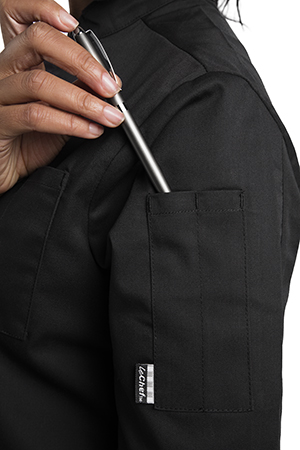
Sleeve and chest pockets always keep your essentials to hand. Narrow pockets are great for storing your thermometer or pen, while larger pockets are great for holding check pads. But if you switch between back of house and front of house and want a simpler alternative, then a jacket without pockets is the answer.
Chef Jackets with Neck Tabs
Do you normally wear an apron over your chef’s jacket? You might want to consider a jacket with a neck tab. It holds the apron strap in place so it doesn’t irritate your neck.
Chef Jacket Fastenings
Poppers stay flush to the material on your jacket so they won’t catch on anything. They’re quick to undo which means you can take your jacket off quickly and easily put it on.
Removable studs can be replaced as and when you need them. They can be taken off your jacket so they’re not damaged in the wash.
Knotted cloth or cotton covered buttons can handle the hammering buttons often take from contact with kitchen equipment. Plus they don’t absorb heat like metal fastenings can.
Chef Jacket Materials
Polyester
Polyester is strong and flexible. It dries quickly and resists wrinkles so it’s easy to maintain. Plus it’s great value which is exactly what you want when you’re buying several chefs jackets.
Cotton
Cotton is made from natural fibres that are free of chemicals that can irritate the skin. It’s soft, breathable and easily stretches making it comfortable to wear. The fabric doesn’t hold on to smells either. It releases strong smells quicker than other fabrics, which is especially important working in a kitchen that serves so many fragrant dishes.
But cotton creases easily so you’ll need to iron it after every wash.
Polycotton
Polycotton is the best of both worlds as it’s a combination of polyester and cotton threads. It’s stronger, lighter and cheaper than cotton. Plus any creases drop out easily so it’s easy to maintain too.
Performance Fabrics
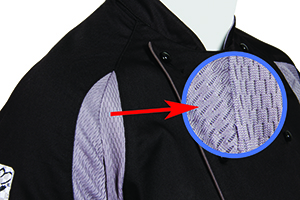
This award winning fabric technology wicks heat and moisture away from the skin. The cool vent mesh panels increase airflow back to the skin, with Le Chef cool vent technology increasing airflow by as much as 350%. So this type of fabric is something you should consider if you work in a very hot kitchen.
Super Combed 120 Cotton
This premium 100% cotton fabric is combed to remove shorter fibres which results in finer, stronger and softer cotton. It’s breathable and it’s comfortable to wear, which is why many executive chef jackets are made from this material.
TIP: Take the pressure off yourself and your staff by sending everyone’s uniform to your local dry cleaners. They can launder, press and return your chef whites on a weekly basis so your high standards are always upheld.
Finding the Right Fit
Getting the right fit is crucial. A dropped shoulder ensures a loose fit, giving you extra movement in the arms and across the shoulders which is vital during a long shift. Pay particular attention to the armpits and other chaffing areas. And focus on the stitching too, if you see loose stitching you’ll know it won’t last very long.

We want you to find your best fit, which is why you’ll find a product size guide on every chef jacket product page. Follow the instructions shown below to find your size and compare all the jackets we have on offer.


Chest / Bust
Measure over clothes when sizing coats.
Measure around the fullest area of chest/bust and underarms.
Keep tape straight and level.
Waist
Measure just above your hip bone, just a bit above your belly button.
Breathe comfortably, don't hold your breath.
Inseam
Measure straight from the base of your crotch seam to your shoe top.